

Application for Criminal Rehabilitation - Driving While Impaired Conviction - Approved
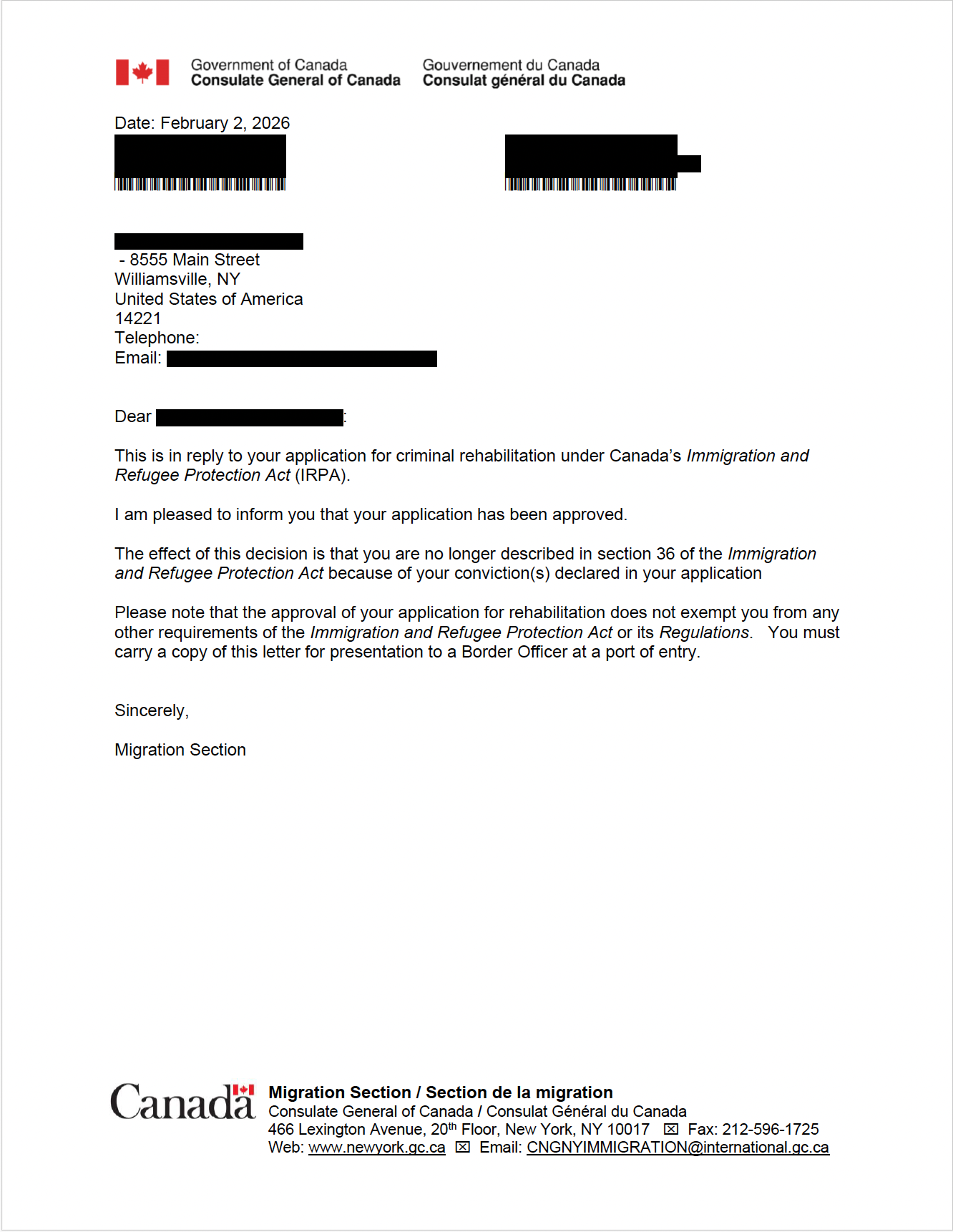
Application: Application for Criminal Rehabilitation under Canada’s Immigration and Refugee Protection Act (IRPA)
Decision: Approved
Date of Submission: February 2025
Date of Approval: February 2026
Approval Period: The effect of the decision is that client is no longer inadmissible for the conviction declared in her application.
Case Background: Pursuant section of 36(3)(c) of the Immigration and Refugee Protection Act (“IRPA”), an Application for Criminal Rehabilitation was submitted to overcome client’s inadmissibility to Canada under section 36 of IRPA. Specifically, client was convicted of “Driving Under the Influence Alcohol/Drugs” under Idaho law.
In 2024, the client was invited to attend a flight attendant training program in the United States. However, because the airline operates through partnerships with major U.S. carriers that service routes across North America—including Canadian provinces—the client’s prior conviction rendered her inadmissible to Canada and prevented her from moving forward with the training. As a result, the client contacted my office, and after reviewing her history, we determined that she was an excellent candidate for Criminal Rehabilitation.
Criminal Rehabilitation is a formal process where a person asks Canada to recognize that they have been rehabilitated and should no longer be considered inadmissible. It’s a legal application supported by evidence showing:
enough time has passed since the sentence was completed,
the person has lived a stable, law-abiding life since,
they do not pose a risk to the safety of the public, and
there is a legitimate purpose for travel to Canada.
If approved, Criminal Rehabilitation can allow someone to enter Canada again without needing a special permission each time.
In general, an applicant must show that at least five years have passed since the completion of all aspects of the sentence, which can include:
jail time (if any),
probation,
fines and fees,
restitution,
courses or treatment,
community service,
license suspensions (depending on the situation and how the sentence is documented).
Lastly, a strong application doesn’t just say “I’m a good person now,” It shows it through evidence and a coherent narrative. Common supporting evidence includes:
FBI identity history summary (and state/provincial police clearances)
court records showing sentence completion and payment of fines/fees
treatment/course completion certificates (if applicable)
stable employment history
letters of support describing character and reliability
a thoughtful personal statement addressing:
what happened,
what changed,
what was learned,
why it will not happen again
In the case that inspired this post, the submission emphasized that the offense was isolated, occurred years ago, and was followed by a sustained record of stability and lawful behavior—supported by clearances and supporting letters.